
What legal aspects must you consider when adapting an original work?
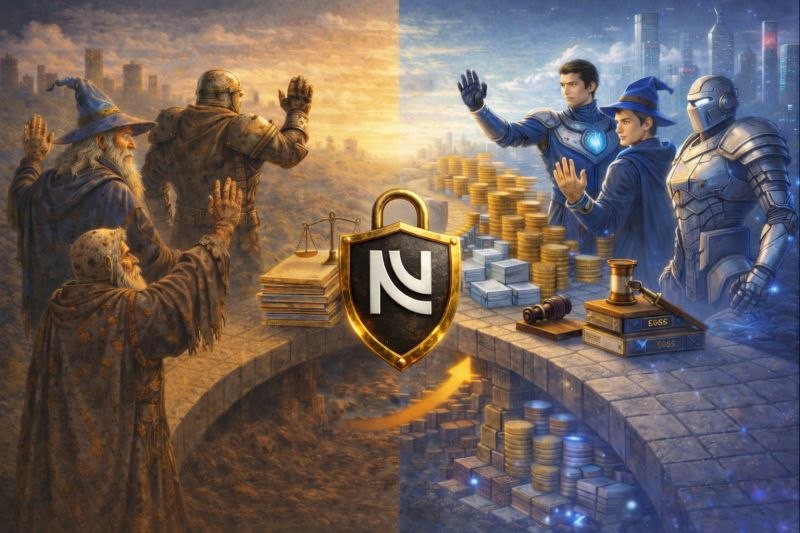
These years we are witnessing the consolidation of one of the most effective business models in the video game and digital entertainment industry: remakes and adaptations of original works. Demand exists, the numbers back it up and more and more studios bet on exploiting pre-existing works through derivative ones. But here appears the critical point we see project after project: a derivative work's commercial success does not depend only on creative talent, but on how its development and exploitation are legally structured.
The remake moment, with data
The industry's intuition says audiences tire of franchises. The data says otherwise: a recent Gamesight analysis, over a sample of more than 8,000 content creators and five franchises, found that sequels not only keep the interest alive but outperform the original titles in audience. Sequels and adaptations increase audience and engagement, and that explains studios' growing bet on exploiting original works through derivative ones: remakes, remasters, sequels and cross-media adaptations.
For a firm like ours, managing projects of this calibre every year, the pattern repeats: the conversation starts with the art and the budget, and it should start with another question: who holds the rights, and what exactly does the paper allowing you to touch them say?
The critical point: the legal structure
Legally, a remake is a derivative work: a transformation of a pre-existing work which, as we explained regarding board games born from video games, can only exist with the authorisation of the original work's owner, because transformation is their exclusive right.
That turns the licence agreement into the foundation of the entire project: it defines what can be done, who exploits the result and what happens if things go wrong. From our experience managing these projects, four aspects separate well-built adaptations from the ones that end in conflict. One by one.
First: title and authority over the original work
Every remake starts from a protected original work, with one or several rights holders. And that plural is not rhetorical: in works with years of history, rights may be spread across the creating studio, successive publishers, heirs or funds that bought catalogues. Before signing anything you must verify who can truly authorise the transformation, and demand warranties of title and authority in the contract: the licensor's declarations that it holds the rights it grants, with an obligation to indemnify if a third party shows up claiming.
Without those warranties, the whole project is built on sand: every euro invested in development depends on an authorisation that may have been worthless. It is the same chain of title discipline we demand for one's own work, now applied to the third-party work about to be adapted.
Second: the licence and its three dimensions
The centrepiece of the derivative work's creation is the licence. And the golden rule is that it cannot be generic: Spanish law interprets assignments restrictively and limits them to what was expressly agreed, so everything the licence does not say will end up playing against someone. Three dimensions must be precisely delimited:
- Duration: for how long the derivative work can be developed and exploited, and what happens at expiry.
- Territory: where it can be exploited.
- The modes of exploitation and their real scope, which is where the project is won or lost: which rights are granted exactly? May the licensee commercially exploit the derivative work, or is its role limited to creating it and immediately assigning the rights to the original work's owner? Those are two completely different businesses hiding under the same word, "remake". And in the first case, what about the trade mark associated with the original work? The game's title is usually registered as a trade mark, and a copyright licence does not drag the trade mark along with it: the licence must expressly provide whether its use is granted or not, as we explained regarding trade marks in your video game.
The distinction between holding a faculty and holding a delimited right we already saw in the publisher's platform veto: here it operates the same way, multiplied by every mode.
Creative conditions: who has the final say
There is a clause creatives tend to receive with suspicion and which actually protects everyone: the creative conditions. Who has the final say over the result?
The reason runs deep: a badly executed derivative work does not just risk commercial failure; it can seriously damage the original IP's value, break its narrative and aesthetic coherence and trigger the community's rejection. That is why well-structured licences usually reserve for the original work's owner powers of supervision, creative control or approval (review milestones, build approvals, veto over essential decisions) as a mechanism to protect the work's spirit.
And there is a legal reinforcement worth remembering: the original work's author keeps their moral rights, among them integrity, which allows them to oppose distortions or alterations prejudicial to their interests or reputation. It is common for the absence of agreed creative control to end up in claims for infringement of moral rights: the conflict the contract did not order, a court ends up ordering. We saw in the Playdead case how uncomfortable that territory is; in adaptations the risk multiplies, because the work is transformed by definition.
The new elements: what the remake adds
One question almost no adaptation contract answers well: will new original elements be developed that did not exist in the source work? A new soundtrack, added characters, new levels, dubbing.
Each of those elements is a creation with its own author and its own rights, and the contract must decide their fate: are they integrated under the control of the original work's owner, or kept by whoever creates them? If the licence is silent, the remake ends up a mosaic of crossed ownerships: the licensor controls the universe, the adapting studio controls the new music, and the next exploitation (a sequel to the remake, a soundtrack edition) needs everyone's permission. Who exactly owns that new soundtrack, by the way, is covered in detail in our article on freelance composers: the same problem, one link down the chain.
Third: confidentiality
In projects with high media and commercial sensitivity, confidentiality is no filler clause: any leak can compromise the launch, the marketing strategy and the IP's own value. A remake's announcement is a commercial asset in itself (dates, trailers, platform exclusives), and a leak burns it.
The full package includes confidentiality obligations with defined scope and duration, extension to all the adapter's staff and collaborators (the same confidentiality agreements we demand for one's own know-how), agreed communication protocols and concrete consequences for a leak. In these projects, who may announce what and when is part of the deal.
Fourth: termination and the exit
And the aspect that marks contracts drafted by someone who has watched a project end badly: regulating when and how the contract is deemed terminated. An expiry date is not enough; you must define:
- The essential breaches entitling termination (missed milestones, quality below the agreed standard, non-payment, breach of confidentiality).
- The effects of termination: the cessation of exploitation and its deadlines (immediate removal from stores or a sell-off period?).
- The fate of the derivative work: who keeps what? The developed material, the code, the new assets. Without a rule, the half-made remake becomes a hostage.
- The survival of certain obligations after termination: confidentiality, warranties, indemnities.
It is the same philosophy as the reversion of rights we recommend in publishing contracts: the exit is negotiated at the entrance, while it is still cheap.
Frequently asked questions
▸What is a remake, legally?NPC
▸What should I verify before signing an adaptation licence?NPC
▸What exactly must the licence delimit?NPC
▸Why does the original work's owner reserve creative control?NPC
▸Who owns the new elements the remake adds?NPC
▸What should the contract regulate for termination?NPC
▸Do remakes really work commercially?NPC
Sources
- Spanish Intellectual Property Act, Royal Legislative Decree 1/1996, articles 11, 14, 21 and 43 (BOE)
- Spanish Trade Marks Act, Law 17/2001 (BOE)
- Gamesight: sequel performance analysis across streaming audiences
At NN Agency we manage adaptation and remake projects every year: from title verification and licence negotiation to the development and confidentiality contracts and the defence when the project goes wrong. If you are about to adapt someone else's work (or to let someone adapt yours), the licence is the project: the first consultation is free.
Facing something similar at your studio? The first consultation is free.
Free consultation