
Can I stop the soundtrack I composed as a freelancer from being commercialised?
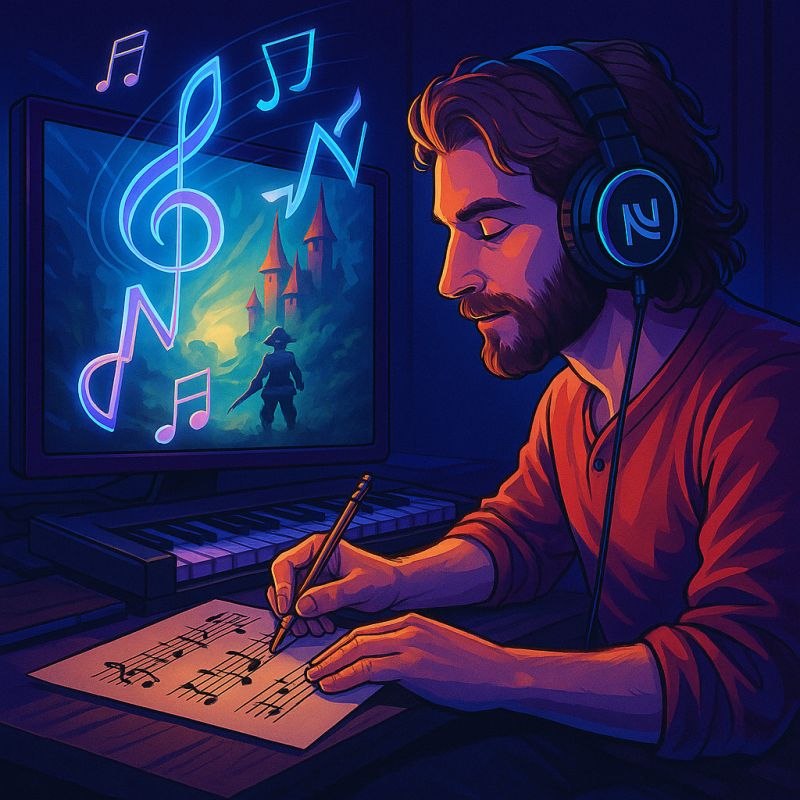
In the video game world it is common for studios to commission their soundtracks from freelance composers. This apparently simple practice hides a fundamental legal question: who may exploit the music once delivered, and on what terms. The answer is not automatic (nor the one almost everyone assumes), and understanding it prevents conflicts that tend to explode at the worst possible time: after the game is published.
The music commission: the practice and the question
The pattern repeats across hundreds of productions: the studio needs a soundtrack, hires a freelance composer, agrees a price, receives the tracks and integrates them into the game. All correct. Months later the soundtrack works, the community asks for it, and the studio puts it on Spotify, presses a collector's vinyl or uses it in its next trailer.
And then the composer's email arrives. Can they object? Didn't they already get paid? The answer requires separating two things everyday language mixes up: paying for a work and acquiring its exploitation rights. Under Spanish law, they are different operations.
The starting rule: paying is not acquiring
The Spanish Intellectual Property Act is clear: the rights over a work always belong to its author, unless there is a valid, expressly agreed assignment. Intellectual property is born in the creator by the mere fact of creation, and it only leaves through the channels the law regulates.
This means that, even after being paid for the commission, the composer remains the holder of the exploitation rights for anything not agreed otherwise. Unlike salaried employees (where the law presumes a certain assignment to the employer, as we saw regarding the video game's chain of title), in a freelance commission there is no presumption of assignment: the commission contract obliges to deliver the work, it does not by itself transfer its exploitation. The price paid remunerates the labour; the rights travel only if the paper names them.
Article 43: only what is written is assigned
The central technical piece is article 43 of the Act, which governs every assignment with a rule of restrictive interpretation: the assignment is limited to the modes of exploitation expressly provided in the contract, along with the agreed time and territory. Any mode not specifically described is considered excluded.
And the same article finishes the job for badly drafted contracts: if the modes are not specifically expressed, the assignment is limited to the one that necessarily follows from the contract itself and is indispensable to fulfil its purpose. In other words: the skimpy contract does not assign "everything", it assigns the minimum its purpose demands.
We already saw this rule at work from the studio's side in the publisher's platform veto; here we see it from the creator's side, and it protects just the same: what was not written was not assigned.
"In the game" versus "related to the game"
Consequently, if the agreement only empowers the studio to use the music in the video game, the assignment is strictly limited to its incorporation into the software itself. All other uses are off limits: releasing records, distribution on platforms like Spotify, inclusion in promotional materials. Each of those is a distinct mode of exploitation the contract did not assign.
However, a simple terminological change can alter the assignment's scope. If the contract uses wording such as "for uses related to the video game", that drafting also covers forms of exploitation keeping a direct, functional and necessary link with the game itself: the trailer made to promote it is the clear example. But not even that wording can ever be read as a general assignment for independent exploitations: the soundtrack as a standalone product (the record, music streaming, the vinyl) is another business, and needs its own assignment.
Half a line of difference in the contract, two completely different rights maps. It is the musical version of what we told about know-how and the papers that never get signed: conflicts are not created by bad faith, they are created by short drafting.
What the law presumes when the contract is silent
Equally relevant are the other three elements of any assignment, because the law supplies the answer when the contract does not define them:
- Territory: absent agreement, the assignment is limited to the country where it is made. For a globally distributed game, a "Spanish" assignment is a serious problem.
- Duration: absent agreement, five years. After that, the rights return to the composer, with the game still on sale.
- Sub-assignment: without express authorisation, the studio cannot assign the rights onwards (to a publisher, a label, a platform).
All three defaults protect the author, the weaker party the law set out to protect. And all three are deadly traps for the careless studio: a global game, with a long commercial life and a publisher in the middle, needs exactly the opposite of what the law presumes.
The infringement that surprises studios
Here is the point that is hardest to digest: any use outside what was agreed constitutes copyright infringement even though the studio paid remuneration. Paying for the commission does not buy immunity: it buys what the contract says it buys.
The studio that uploads to Spotify a soundtrack assigned only "for the video game" is exploiting a mode it never acquired: cessation of the exploitation and damages are on the table, and in between, a negotiation from the worst possible position (with the record published and the community watching). The good news for everyone: this conflict is among the cheapest to prevent and the most expensive to litigate. Prevention takes a paragraph; litigation takes experts.
For the composer: what you keep and how to use it
If you compose for video games as a freelancer, the framework above is your shield:
- If the contract does not properly specify the use that can be made of your music, you keep control over your work outside the video game: you can negotiate new licences, authorise or refuse additional uses and be paid for every new form of exploitation.
- Read the commission before signing looking for three words: modes, territory, duration. Whatever is missing plays in your favour, but let it be missing by your decision, not by oversight: ambiguity breeds disputes, and disputes cost more than negotiating.
- Value each mode separately: incorporation into the game, music streaming, trailers, audio merchandising. Assigning everything in a block for the price of the first mode is giving the rest away.
- And always keep your credit: the right to be named as author is a moral right and cannot be waived, as we explained in the Playdead case.
For the studio: how to close the commission properly
And the other side, the one we review every week: if the studio wants to exploit the soundtrack in other fields, it must provide for it expressly in the contract. The minimum list of a well-closed commission:
- Enumerated modes: incorporation into the game, promotion and trailers, music streaming, physical editions, future synchronisations. Each one, named.
- Worldwide territory and a duration matching the game's commercial life (or an assignment for the whole term of protection, if negotiated).
- The right to assign to third parties, indispensable where a publisher or label is on the horizon.
- Defined exclusivity: may the composer reuse or license those tracks to others?
- A price reflecting the package: whoever asks for all the modes should pay more than whoever asks for one. It is fair, and it is also what makes the contract defensible if anyone challenges it.
The whole article fits in one sentence: in creative commissions, the short paper always ends up being the expensive paper.
Frequently asked questions
▸I composed a game's music and was paid. Can I object to it being sold separately?NPC
▸Doesn't paying for the commission transfer the rights?NPC
▸What exactly does article 43 of the Spanish IP Act say?NPC
▸What is the difference between "using the music in the game" and "uses related to the game"?NPC
▸Can the studio assign my music to its publisher?NPC
▸I run a studio. What should the soundtrack commission contract include?NPC
▸What happens if the contract says nothing about territory or duration?NPC
Sources
At NN Agency we work both chairs at this table: we help freelance composers and creatives understand and negotiate what they assign, and studios close commissions that cover the game's whole commercial life. If your soundtrack is playing where it should not (or your commission contract fits in an email), let's talk: the first consultation is free.
Facing something similar at your studio? The first consultation is free.
Free consultation