
Can the publisher stop my game from being released on a specific platform?
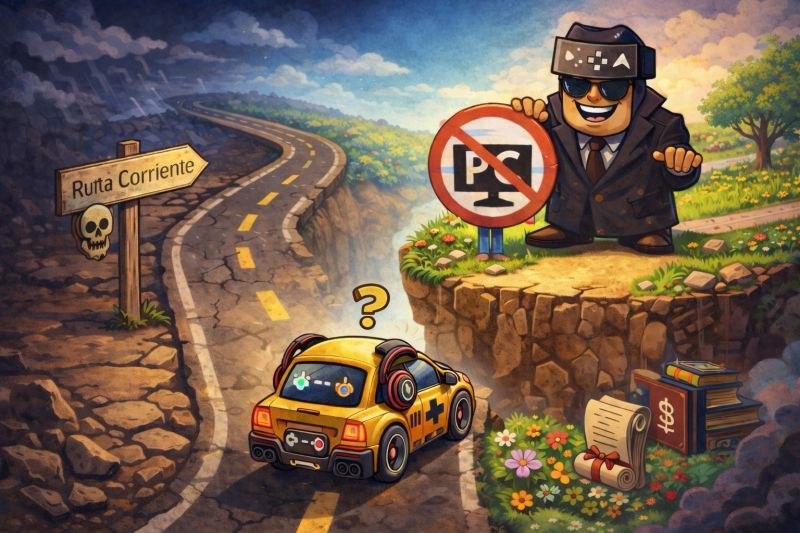
Sony has decided to rethink the release of its PS5 titles on PC: as has emerged, its big narrative games will go back to being console exclusives, leaving behind the strategy of porting them to computer after an initial exclusivity window. The news puts back on the table a question relevant to the whole industry (and very concrete for any studio with a publishing contract): how a video game's exploitation rights are legally structured, and who decides which platforms it ships on.
The case: Sony pulls its exclusives back to console
For years, PlayStation's strategy was clear: initial console exclusivity and, some time later, a PC version. That cycle appears to be over. According to what has emerged from an internal meeting in May 2026, the CEO of PlayStation Studios told his teams that the big narrative first-party titles will remain exclusive to PlayStation consoles, and that only live-service games (which need massive player bases) will keep launching on PC as well.
There is also an eloquent corporate signal: from Sony's annual report the sentence has disappeared that a year earlier promised to "continue efforts to deploy first-party titles to multiple platforms such as PC". And behind it, a plain economic reason: after the strong initial results of the first ports, PC sales of the rest of the catalogue collapsed.
The decision is legitimate and, as we shall see, legally simple for Sony. But it lets us ask the question that really matters to a studio: could your publisher do the same with your game?
The legal piece: modes of exploitation
This sits within what intellectual property law calls the modes of exploitation of a work. Video games, as complex works combining software, audiovisual elements, music and graphic design, are protected primarily through copyright. And those rights include the faculty to decide how the work is exploited: reproduction, distribution, communication to the public and, especially in games, the platforms on which the title is made available to the public.
Releasing a game for console, for PC or across platforms is, in each case, a concrete form of exploiting the work. Limiting that exploitation to a specific environment (one particular console, say) therefore falls within the decisions that belong to the rights holder or to whoever has received a licence to exploit them. It is not a marketing whim: it is the exercise of an exclusive right.
Why Sony can do this without conflict
In the case that opens this article, the answer is clean: in its first-party games, Sony gathers in a single hand ownership of the intellectual property and the publisher's role. The one deciding not to bring Ghost of Yotei to PC is the same one who holds the rights to decide it. The strategy can be debated; legally, there is no crack.
The industry's structure, however, usually makes things more complex. In many cases the publisher releasing the game is not the original owner of the intellectual property: the usual pattern is that the developing studio creates the work and later assigns or licenses certain rights to the publisher through publishing or development agreements. And that is where the title's question stops having a single answer.
When the studio and the publisher are different persons
Those agreements delimit the scope of exploitation quite precisely: the contract can expressly provide whether the game will launch only on console, whether there will be a temporary exclusivity, or whether a later release on other platforms is contemplated.
And here Spanish law wraps the studio in a rule worth knowing: assignments of exploitation rights are interpreted restrictively. Article 43 of the Intellectual Property Act limits the assignment to the modes of exploitation expressly provided and to the agreed time and territory; silence on time or territory triggers default rules (five years, the country of the assignment), and whatever was not expressly assigned stays with the studio.
Translated into platforms: if your contract assigns exploitation "on PlayStation and Xbox consoles", the publisher does not hold the PC rights. And conversely: if it does hold them, you have to look at on what terms, which is exactly the next distinction.
Faculty to exploit versus obligation to exploit
This is where a strategy change like the one we are discussing becomes relevant, and the distinction is the heart of this article:
If the contract grants the publisher merely the faculty to exploit the game on certain platforms, ultimately not bringing the title to PC does not necessarily pose any legal problem: the publisher would be exercising its business discretion within the exploitation rights it was granted. Deciding where and when to launch is precisely what the rights were assigned for.
Different would be the situation where the contract stipulated an express obligation to exploit on certain platforms. In that case, the failure to launch can generate a contractual conflict between the publisher and the IP-owning studio: the developer could argue that non-exploitation on a contractually foreseen platform reduces the work's commercial potential and harms the project's economic return. And the argument has muscle, because in practice the studio is paid in royalties: every unexploited platform is revenue that never arrives, as we explained regarding royalty reports and audits.
The same clause, two destinies: "may release on PC" protects the publisher; "shall release on PC within the following twelve months" protects the studio. Half a word of difference, the whole lawsuit inside.
What if the contract says nothing?
There remains the uncomfortable scenario: PC rights assigned, no express launch obligation and no deadlines. Can the publisher sit on them indefinitely?
The starting point is that the obligation is not presumed: absent an agreement, the publisher manages its discretion. But neither is it a blank cheque. Contracts are integrated by good faith, and where the studio's remuneration depends on royalties, a total and prolonged passivity over exclusively assigned rights can come to be challenged as contrary to the contract's economic purpose: the studio handed over its work precisely so that it would be exploited. That is case-by-case litigation territory, not an automatic rule, and for that very reason it is the scenario a good contract does not leave open: the solution is not to litigate the ambiguity, but not to sign it.
The clauses the studio should ask for
At NN Agency, when we review a publishing contract, these are the pieces we ask for so that the platform strategy is not left to the publisher's whim:
- Committed platforms, not just permitted ones: the text should distinguish which platforms carry a launch obligation (with dates or verifiable milestones) and which are mere faculty.
- Exclusivity windows with an expiry date: if there is initial exclusivity on one console, it should have a defined duration and the contract should say what happens afterwards.
- Reversion of unexercised rights: if the publisher does not launch on an assigned platform within a deadline, those rights return to the studio automatically, without litigation. It is the same star clause we recommend against the publisher that does not deliver, applied per mode of exploitation.
- Guaranteed minimums or compensation where the publisher keeps broad discretion: if it decides where your work is exploited, the risk of its inaction should not be paid by you.
- Information and consultation: an obligation to communicate the release strategy and relevant changes, so the studio does not learn about them from the press, as has happened with Sony's ports.
Frequently asked questions
▸Can my publisher stop my game from launching on a specific platform?NPC
▸What are a video game's modes of exploitation?NPC
▸If my contract does not mention PC, can the publisher release the game on PC?NPC
▸Is the publisher obliged to exploit my game if the contract is silent?NPC
▸What can I claim if the publisher fails to launch on a committed platform?NPC
▸What platform clauses should I ask for before signing?NPC
▸Why can Sony pull its games from PC without legal trouble?NPC
Sources
- Spanish Intellectual Property Act, Royal Legislative Decree 1/1996, articles 17 and 43 (BOE)
- Spanish Civil Code, article 1258 (BOE)
- VGC: PlayStation's PC port era appears over as Sony scrubs key policy language
- GamesHub: Sony reassesses PlayStation games on PC
At NN Agency we help studios review and negotiate their publishing contracts, delimit the modes of exploitation they assign and the ones they keep and claim when the publisher does not perform. Before signing away who decides where your game ships, talk to us: the first consultation is free.
Facing something similar at your studio? The first consultation is free.
Free consultation