
You funded your game on Kickstarter and the publisher won't deliver: the Chained Echoes case
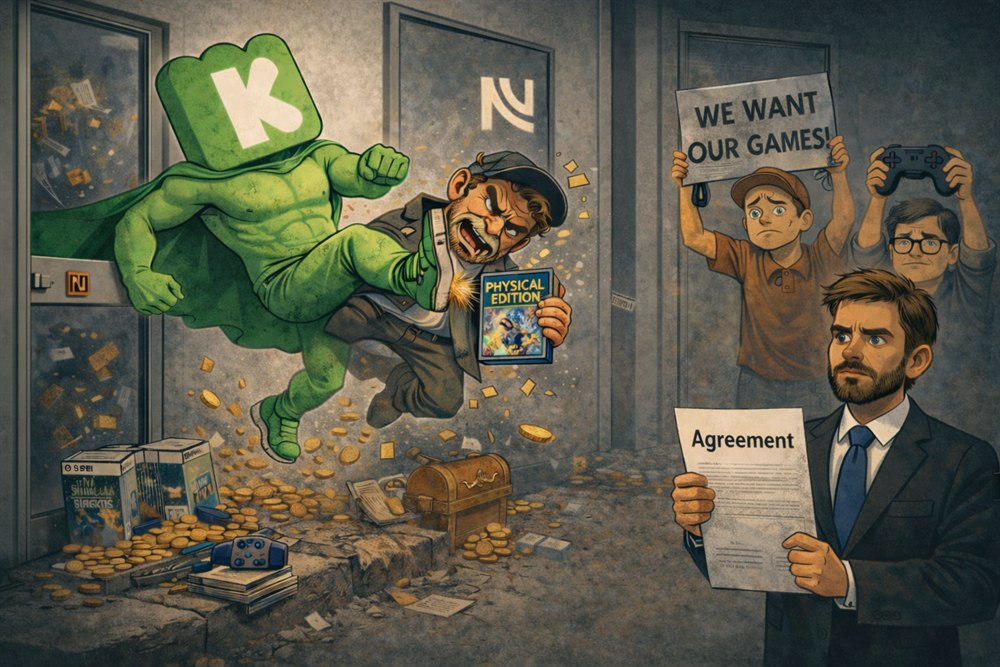
A new breach-of-contract dispute in the games industry, and this one touches a nerve independent studios know well: promised Kickstarter rewards. The creator of Chained Echoes, one of the most acclaimed independent RPGs of recent years, has started legal action against the publisher responsible for its physical editions, which still have not reached backers years after they were promised. The case is a manual of everything that can go wrong between a developer, their publisher and their community, and of how to manage it once it has gone wrong.
The case: Chained Echoes and the editions that never arrived
In 2019, German developer Matthias Linda launched the campaign for his video game on Kickstarter, the crowdfunding platform where users ("backers") contribute funds to complete a project in development in exchange for rewards. The campaign comfortably beat its goal: more than 4,500 backers pledged 130,409 euros, and among the committed rewards were the game's physical editions, to be produced and distributed in cooperation with publisher First Press Games.
Chained Echoes launched at the end of 2022 to excellent reviews. But years later, most of the promised physical editions remain undelivered: only the PS4 version has reached backers. Linda has announced the break with the publisher, the preparation of legal action and a solution for his community: each affected backer can choose between receiving a new physical edition produced by another publisher or a refund of their pledge.
One fact aggravates the picture: reportedly, close to a dozen independent developers have complained of similar problems with the same publisher in recent years. This is not a one-off stumble, but a pattern the sector knew about.
What a crowdfunding campaign is, legally
In practice, and especially in games, campaign rewards (physical copies, collector's editions, exclusive digital content) create in the backer an expectation of performance very similar to that of a traditional purchase. And that expectation has legal translation.
The platform limits its role to that of mere intermediary: its terms of use say so expressly, and it does not answer for projects delivering. The one who takes on the commitment towards the backers is the campaign creator: deliver the promised rewards or answer for the failure. It is not a no-strings donation; it is a relationship with obligations, and the community (and, if it comes to it, a judge) will read it that way.
That is why crowdfunding, born as an informal alternative to traditional financing, has become a source of obligations you must be able to perform. And that is where contracts with third parties come in.
The chain of responsibility: backers, creator, publisher
The Chained Echoes case draws a three-link chain worth keeping clear:
- Backer → creator: the backer contributed funds against the promise of a reward. Their counterparty is the creator, not the publisher the creator subcontracted production to. If the edition does not arrive, the backer's natural claim points at the creator.
- Creator → publisher: if producing and distributing the physical copies was the publisher's contractual obligation, the developer cannot be blamed for the delay, but that does not free them towards their backers: it gives them someone to claim against. The conflict moves to the contractual relationship between developer and publisher.
- The practical result: the creator is caught in the middle. They face their community (refunds, a new publisher, communication) while litigating against the one who failed them. That is exactly Linda's position, and it is the position a good contract tries to make as painless as possible.
The contract with the physical editions publisher
As we have been explaining on this blog, these agreements are usually structured as an exploitation licence in the publisher's favour: the developer grants the right to manufacture and distribute the physical product, and the publisher takes on the logistical and commercial obligations in exchange for its revenue, usually via royalties (how to control that revenue is covered in our article on royalty reports and audits).
The key word is obligations. A well-drafted physical publishing contract does not stop at splitting percentages: it sets production and delivery deadlines, quality standards, verifiable milestones, information duties towards the developer and concrete consequences for each delay. When the contract only regulates the money and leaves performance to trust, the developer discovers their helplessness precisely when no cheap remedy is left.
When the publisher breaches: terminate, enforce, claim
If the publisher breaches its production and delivery obligations, that can amount to a material breach of contract, which in our legal system (article 1124 of the Spanish Civil Code, with equivalents across neighbouring jurisdictions) entitles the developer to choose: demand performance or terminate the contract, in both cases with damages.
And here is a point worth stressing, because it falls short in almost every claim: damages are not limited to the direct economic loss (what was paid, what was never produced). They also include the reputational impact and the loss of trust of the backer community, which for an independent studio is its most valuable asset: the community that funded this game was the one meant to fund the next. Quantifying that harm is hard, but waiving it upfront is giving it away.
In parallel, the developer has to manage their backers. Linda's solution (a choice between a new edition or a refund) is legally sound: it mitigates the damage, stops the reputational bleeding and, along the way, builds the proof that the creator did what was in their power.
The chain-of-title trap on the way out
The eventual termination of the contract raises a delicate chain of title issue: before entrusting production and distribution to another entity, the developer must make sure they have fully recovered the rights assigned to the outgoing publisher, avoiding conflicts arising from exclusivities or licences still in force.
The typical mistake is signing with the new publisher while the termination of the old contract is still being disputed. If the original licence was exclusive and its extinction is not formalised (by agreement or judgment), the new edition can be born infringing the old exclusivity, and the developer ends up with two disputes where they had one. It is the same chain of title discipline we demand at a project's start, applied to the exit: document the reversion of every right before granting it again.
That is why well-drafted contracts include automatic reversion clauses: if the publisher misses defined milestones by defined deadlines, the assigned rights return to the developer without litigation. One line in the contract that saves years in court.
How to shield your campaign before launching it
The case reflects a clear trend: as crowdfunded projects professionalise, disputes tied to publishing, distribution and performance towards backers multiply. Our short list for the studio about to launch a campaign:
- Promise what depends on you or is contractually secured. Every reward that depends on a third party (physical editions, merchandising, vinyl soundtracks) must have behind it a contract with deadlines and remedies, not a statement of intent.
- Milestones, deadlines and consequences in the publishing contract: production, quality control, delivery by territory, information duties. And for each breach, its remedy: penalties, termination rights, automatic reversion of rights.
- Vet the publisher before signing: delivery track record, other projects, other developers. In this case, the pattern of failures was known in the sector.
- Reserve communication with your community: the contract must let you tell your backers the real production status without breaching confidentiality.
- Plan the exit from the entrance: what happens to rights, materials, moulds and stock if it ends badly. It negotiates cheaply on day one and painfully on the last.
Frequently asked questions
▸Who answers to the backers if rewards never arrive?NPC
▸Can I sue my publisher for not delivering the physical editions?NPC
▸What can I claim beyond the money lost?NPC
▸Can I commission the editions from another publisher while litigating with the first?NPC
▸What is an automatic reversion clause and why do I need one?NPC
▸Can backers claim directly against me as a studio?NPC
▸What should I check about a physical editions publisher before signing?NPC
Sources
- Spanish Civil Code, article 1124 (BOE)
- VGC: Chained Echoes' creator is suing its publisher
- Kotaku: Chained Echoes dev sues company for not making physical copies
- Kickstarter Terms of Use
At NN Agency we help studios and developers review and negotiate their publishing and distribution contracts, claim against breaches and recover assigned rights before relaunching a project. If your publisher will not deliver, move before the problem belongs to your backers: the first consultation is free.
Facing something similar at your studio? The first consultation is free.
Free consultation