
The lawsuit against Sony over the PlayStation Store monopoly
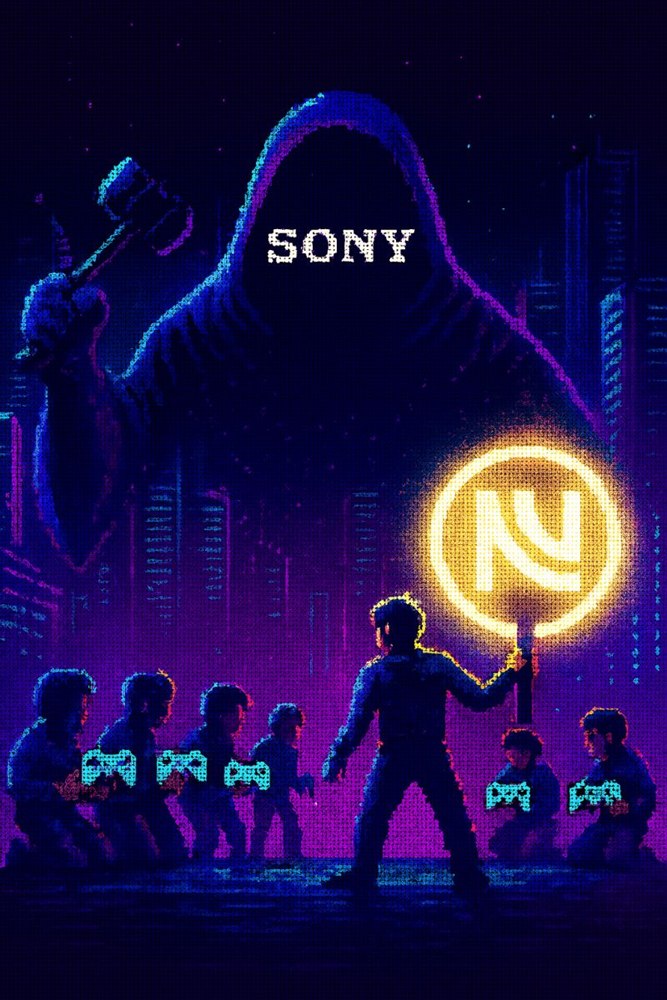
Some questions we pose as analysis and time turns into a living court file. This is one of them, which is why we are bringing it back: when a Dutch foundation sued Sony on behalf of more than 1.7 million PlayStation users for abuse of a dominant position through the PS Store, we pointed out that the real underlying debate was another one: whether holding intellectual property rights can serve as a shield to close a digital market. A year later, that claim has held its first hearing, a second giant lawsuit against the same model has already been tried in the United Kingdom, and the question sits, literally, on the desks of European courts.
The case that uncovered it: the Dutch claim
The action is brought by Stichting Massaschade & Consument, a Dutch collective-redress foundation, representing more than 1.7 million PlayStation users. Its thesis: Sony abused its dominant position in the digital distribution of video games through its platform, the PS Store, charging prices a competitive market would not have allowed (the foundation quantifies overcharges of up to 47 per cent on digital games) and claiming more than 400 million euros.
What was then a freshly filed claim is today a procedure in motion: the first hearing took place on 29 June 2026 before the Midden-Nederland district court, and the action has kept gathering public support from consumer and player movements. The case stopped being a press note and became what we anticipated: the European test bench for the closed-store model.
The model under challenge: a fully closed ecosystem
Unlike other distribution models, Sony maintains a fully closed ecosystem: digital downloads of games can only happen through its official channel, the PS Store. Contractually, this takes the form of an absolute vertical restraint: developers cannot distribute their digital games through alternative routes or set differentiated prices.
The situation is aggravated by the PS5 Digital Edition's architecture: lacking a disc drive, it conditions consumers to acquire all their content exclusively in that environment, automatically accepting the commercial terms the platform imposes. The player who bought that console did not choose a store: the store came inside.
For the developer, the picture is one of economic dependence: either you accept the single channel's terms (its commission, its pricing rules, its conditions), or you give up one of the largest player bases in the world. Effective bargaining power: little to none.
Can IP justify a monopoly? Sony's defence
Against this, Sony invokes its position as holder of intellectual property rights over the hardware, the operating environment and the platform's elements: my console, my rules. The argument has intuitive pull (IP grants exclusives, and exclusives allow excluding), and that is why the title's question matters so much: if owning the system's IP were enough to close the market built on top of it, competition law would have a hole the size of a console.
The European answer, however, has been written for decades: holding IP rights is not enough to exclude competition law scrutiny.
Article 102 TFEU: why IP does not exempt
The analysis runs through article 102 of the Treaty on the Functioning of the European Union, which prohibits the abusive exploitation of a dominant position in the internal market. Applied to the case, the provision allows two qualifications:
- That the conduct can amount to abusive exploitation, insofar as developers are forced to accept restrictive clauses in a context of economic dependence, with no real bargaining capacity: the terrain of the article's own points (a) and (c) (imposing unfair prices or trading conditions, and applying dissimilar conditions to equivalent transactions creating competitive disadvantage).
- That the practices under challenge are not a strategy to protect a creation against unauthorised reproduction (IP's legitimate function), but to close the market, exclude competitors and pass disproportionate terms onto developers and consumers. The exercise of IP rights, in short, is not exempt from the limits antitrust law imposes.
The distinction is the keystone: IP protects the creation; it does not immunise the business model built upon it.
The European doctrine: from Magill to Apple
This reading is no invention of the claim: it is settled doctrine of the Court of Justice and the Commission. Magill (the Irish TV guides) established that refusing to license protected material can be abusive in exceptional circumstances; IMS Health refined the test for essential information infrastructures; Microsoft applied it at scale to operating-system interoperability. And the multibillion fine on Apple over music streaming distribution (plus the new European digital markets framework, which already forces the big gatekeepers to open their ecosystems) confirms which way the wind blows.
The thread running through thirty years of cases: a holder of exclusive rights cannot use its position to block access to an essential infrastructure or to impose unjustifiably burdensome terms on those who depend on it.
One year on: the monopoly front grows
If we are bringing this analysis back today it is not nostalgia: the past year has multiplied the file.
- Netherlands: the Stichting's claim held its first hearing on 29 June 2026. The procedure moves forward with a claim above 400 million euros and public backing from player movements.
- United Kingdom: the collective action before the Competition Appeal Tribunal, on behalf of 12.2 million consumers and worth roughly £2 billion, argues the closed model let Sony charge around a 20 per cent overprice on digital games and content. The trial ran from March to May 2026 and awaits judgment.
- The regulatory context keeps pace: the European digital markets framework has already forced openings in mobile ecosystems, and every ruling against a closed platform (as we saw with the pullback of PC exclusives, platforms are today the board the industry plays on) narrows the room for "my console, my rules".
Two European courts deliberating at once over the same business model: that is what turns a year-old news item into today's required reading.
What it means for developers and consumers
If these actions prosper, a relevant avenue opens in two directions:
- For developers who distributed their titles on the store under unbalanced terms: from the revision of conditions going forward (commissions, price parity, access) to possible claims for the past. The documentation needed is familiar to our readers: contracts and royalty reports showing which terms were endured.
- For consumers harmed by the overcharges, Europe's collective actions are proving able to articulate mass claims, in line with the rights we analysed when discussing what you really buy when you buy a game.
At NN Agency we closely follow both proceedings, to prepare the analyses our clients may need when the judgments arrive. Because they will arrive, and they will move the board.
Frequently asked questions
▸Why is Sony being sued over the PlayStation Store?NPC
▸Can players claim a refund from Sony if the lawsuits succeed?NPC
▸Doesn't owning the console's IP justify controlling its store?NPC
▸What does article 102 TFEU prohibit?NPC
▸Where do the proceedings against Sony stand?NPC
▸What could developers gain if the claims prosper?NPC
▸And consumers?NPC
▸Does this affect only Sony?NPC
Sources
- Treaty on the Functioning of the European Union, article 102 (EUR-Lex)
- CJEU Magill, joined cases C-241/91 P and C-242/91 P (EUR-Lex)
- CJEU IMS Health, case C-418/01 (EUR-Lex)
- Microsoft judgment, case T-201/04 (EUR-Lex)
- TechTimes: PlayStation Store antitrust case reaches Dutch court
- Engadget: Sony faces a multibillion antitrust lawsuit in the UK
At NN Agency we advise studios and developers on their relationships with distribution platforms, review the terms and the numbers they endure and prepare the analyses and claims these proceedings may open. If you distribute in a closed ecosystem and want to know what may change for you, let's talk: the first consultation is free.
Facing something similar at your studio? The first consultation is free.
Free consultation