
The new PEGI criteria: loot boxes now raise the age rating
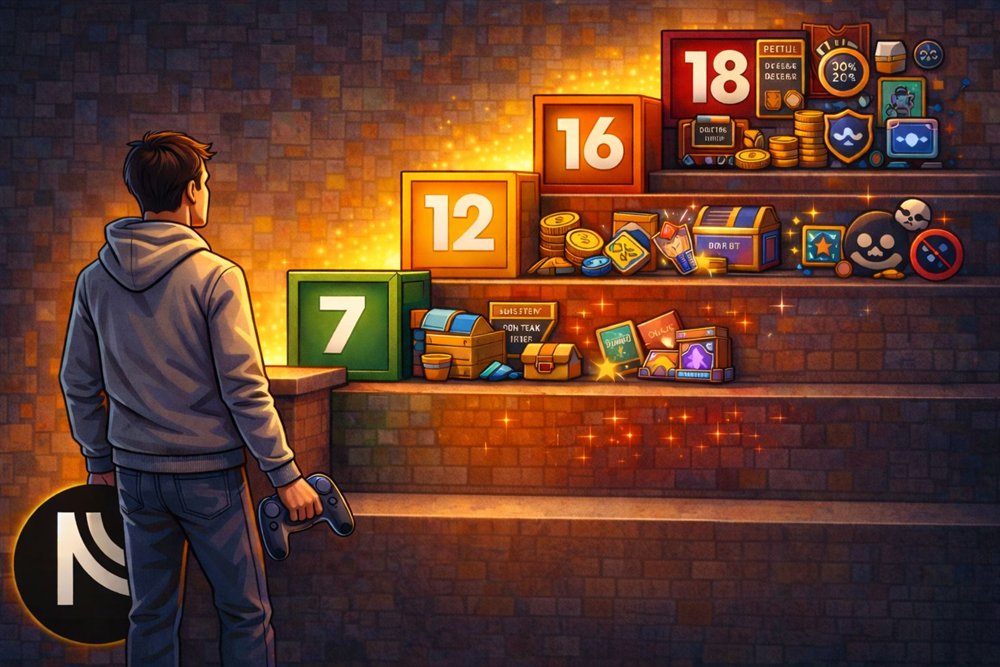
The Pan-European Game Information system has thoroughly overhauled its age rating criteria, and the change has been in force since June 2026. What matters is not that the criteria on violence or language have been tightened: it is that, for the first time, the way a game makes money is itself being rated. PEGI is not a law, but when it comes to publishing it works as if it were.
What PEGI is and why it binds you even though it is not a law
PEGI is a self-regulatory age rating system, driven by the industry itself. It is not a legal rule: it has no statutory force and no power to impose penalties, and it therefore operates as what lawyers call soft law.
That said, its indirect effects are highly significant. In practice, the correct rating is a requirement imposed by platforms and distributors. A breach can prevent a video game from being published or restrict its distribution, so its impact on market access is comparable to that of formal regulation.
It is a distinction worth keeping clear: you will not be fined for breaching PEGI, you will be shut out of the store. For a studio, the second consequence is usually worse than the first.
What exactly has changed
The reform introduces a change of approach, not a mere adjustment of thresholds. Until now the rating looked at what is seen in the game: violence, language, sexual content, drugs, fear. Now it also looks at how the game works on the inside: what spending mechanics it has and what retention mechanics it employs.
To that end, new categories of interactive risk are introduced, assessed independently of the audiovisual content. A game that is perfectly suitable in terms of content can move up a category solely because of its monetisation model.
That is the real headline of the reform: the economic design of a video game now forms part of its age rating.
The new levels, one by one
PEGI 7: retention mechanics
The lower levels now capture retention mechanics: daily rewards or systems that cap spending by default. They are not problematic in themselves, but they are no longer invisible to the rater.
PEGI 12: time pressure and risk of loss
This level covers models based on time pressure or risk of loss: battle passes, time-limited content and limited-quantity purchases. In other words, everything that pushes the player to decide quickly so as not to miss out. And if those purchases are paid for in virtual currency, the rating is only half the problem, because consumer law also requires the price in euros (see the article on virtual currencies).
This is the category that will catch the most studios by surprise, because the battle pass has become the industry standard and until now had no bearing whatsoever on the rating.
PEGI 16: any random system tied to spending
This is the big change. Any random-reward mechanic tied to a payment (loot boxes, gacha systems, digital card packs) automatically becomes PEGI 16 as a minimum.
Automatically means automatically: it does not depend on the theme, the content or how gentle the presentation is. If there is chance and there is money, there is PEGI 16.
PEGI 18: greater economic risk
The highest level covers the scenarios of greatest economic risk, such as games with assets exchangeable for real money or unmoderated online communication.
The case that explains it all
If one example sums up the reform, it is football simulators with a card-pack mode. Titles that for years were rated in the lowest category on the basis of their content (sport, no violence, no strong language) while incorporating one of the most profitable paid random-reward systems in the industry.
Under the new criteria, that same game moves to PEGI 16 because of its internal economy, without a single frame of what appears on screen having changed. That jump, in a product whose natural audience includes players under 16, is not a labelling detail: it is a business model issue.
Retroactivity and live titles
The changes are not retroactive. A game that has already been rated does not change its label overnight merely because of the reform.
But that sentence should not be taken at face value without qualification, because in practice the reach is greater than it seems:
- New releases come under the new criteria, without exception.
- Live games are re-rated when they change substantially. A new season, an expansion or a change of monetisation model can trigger a fresh assessment.
- Versions for other platforms are rated afresh.
A game as a service, which by definition changes every few weeks, can hardly rely on non-retroactivity as a medium-term strategy.
How it fits with what the law has coming
The reform does not happen in a vacuum. It is aligned with the direction being taken by European regulation and by several Member States, including Germany, where similar criteria had already been adopted in the field of child protection.
And in Spain there is an open front that goes well beyond self-regulation: the Spanish draft organic law on the protection of minors in digital environments (Proyecto de Ley Orgánica para la protección de las personas menores de edad en entornos digitales), which envisages banning loot boxes for minors, not simply rating them higher.
The difference between the two is one of degree and of consequences:
- PEGI obliges you to label, and a breach shuts you out of the store.
- The law would oblige you to block access, and a breach would be an administrative offence.
A studio that prepares only for the first will run into the second halfway there.
What it means for your business model
This is where the matter stops being about compliance and becomes about product.
A higher rating shrinks the target audience. It is not just that you lose the players below that age: it changes where the game can be advertised, which platforms feature it, which physical shops stock it and which content creators can cover it without restrictions.
For a title aimed at a family audience, jumping from PEGI 3 to PEGI 16 over a card-pack mechanic can cost more than removing the mechanic.
That is why the reform reinforces something we keep saying: the legal design of a product is decided in the early stages, not at the end. The question "what rating do we want?" should be asked while the game's economy is being designed, not once it is already built and has to be submitted for rating.
What to do in your studio
- Audit the game's economy against the new criteria, not the old ones. List every spending and retention mechanic and assign each one its level.
- Set the target rating before designing the monetisation. If the target is PEGI 12, a paid random-reward system is ruled out from the outset.
- Separate chance from spending. A random reward that is not bought with real money does not trigger the PEGI 16 threshold. It is the combination of the two that sets it off.
- Review the season calendar, because every substantial change can trigger a fresh assessment.
- Document the declaration submitted for rating. The rating is issued on the basis of what the studio declares; an incomplete declaration is your own problem, not the system's.
- Anticipate the legislative track, which is moving ahead of self-regulation where minors are concerned.
Frequently asked questions
▸From what date do the new PEGI criteria apply?NPC
▸Do loot boxes force a PEGI 16 rating?NPC
▸Does a battle pass raise my game's rating?NPC
▸Is PEGI legally binding?NPC
▸Does it affect games that are already published?NPC
▸Can I keep random rewards without moving up to PEGI 16?NPC
▸And the Spanish law on minors, does it say the same?NPC
Sources
- Pan-European Game Information (PEGI)
- Regulation (EU) 2022/2065 — Digital Services Act (EUR-Lex)
- Proyecto de Ley Orgánica para la protección de las personas menores de edad en entornos digitales (Spanish draft organic law on the protection of minors in digital environments — Congress of Deputies)
- Ministerio de Derechos Sociales, Consumo y Agenda 2030 (Spanish Ministry of Social Rights, Consumer Affairs and 2030 Agenda)
At NN Agency we advise studios and publishers through ongoing legal counsel and on publishing, co-development and licensing agreements. If you are designing your game's economy, the conversation about the target rating is worth having now, not when it is time to submit it.
Facing something similar in your studio? The first consultation is free.
Free consultation